
Showing posts with label haku-mokuren. Show all posts
Showing posts with label haku-mokuren. Show all posts
April 26, 2022
April 3, 2022
Haku-mokuren (Yulan magnolia) flowers: Engaku-ji

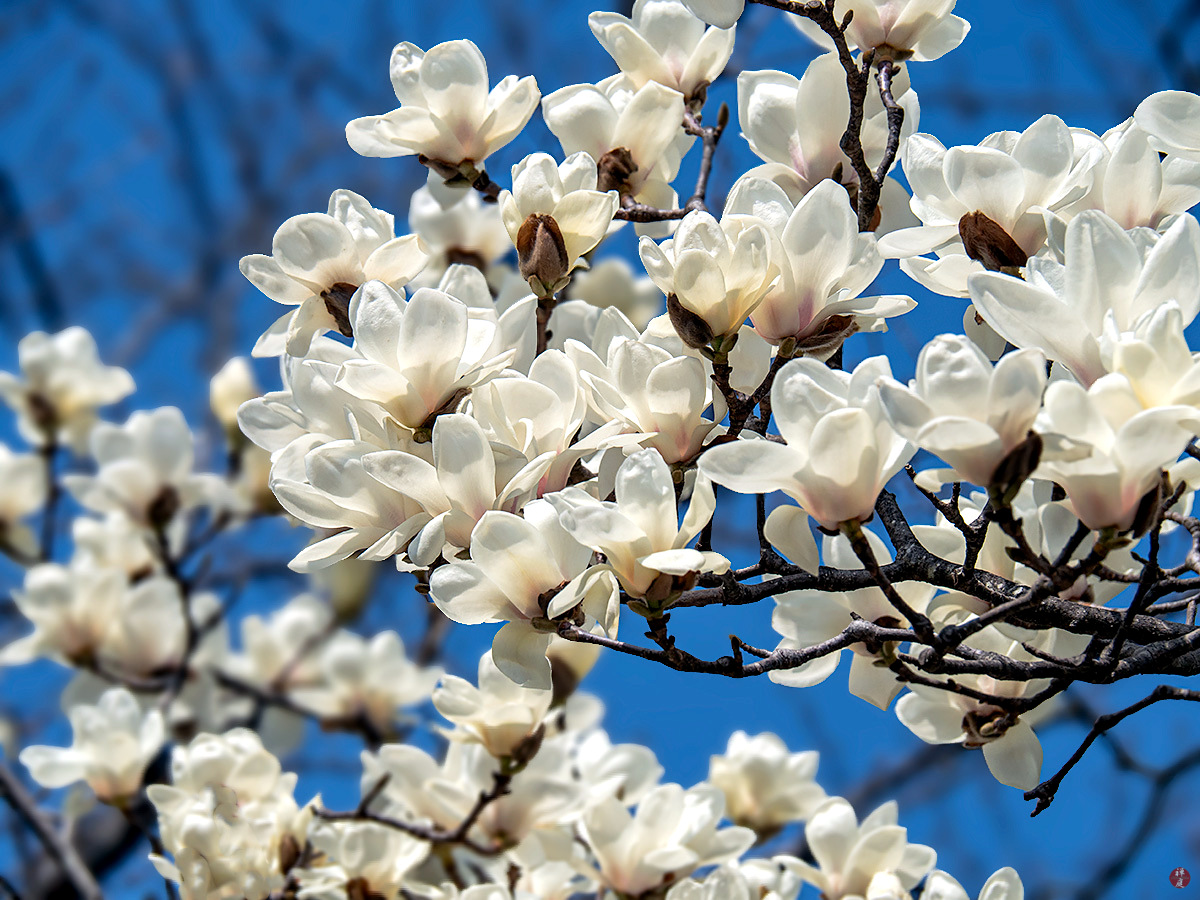
As if to indicate the evident progress of spring, the noble silky-white flowers of Haku-mokuren (white magnolia), which I have been waiting for, are beginning to bloom again this year.
It is said that this white magnolia tree was the gift presented by Chinese writer Lu Xun to this temple in 1933.
Lu Xun (1881-1936), who once stayed in Japan to study at Sendai Medical College, gifted the sapling of this tree as an expression of gratitude to a Zen monk of Engaku-ji Temple who had initiated him into Rinzai Zen in his life in Japan.
The white magnolia tree originates from China, where it is called "Gyokuran (white jade orchid tree)" and its fragrant flower is the city flower of Shanghai where Lu Xun spent the last years of his life.
The white magnolia tree grows to a height of 10 to 15 meters, and in spring, before its new leaves appear, it produces plenty of large, upward-facing white flowers which look like white lotus flowers in the air.


January 23, 2022


March 19, 2021
Haku-mokuren (Magnolia denudata) flowers: Kita-kamakura

Under the gray cloudy sky, the large white flowers of Haku-mokuren (white magnolia tree) are blooming lively with all their might as if to be about to soar high up into the air.
A Haku-mokuren tree grows to a height of 10 to 15 meters, and in spring, before the new leaves appear, it bears many, white, and lotus-shaped flowers that bloom towards the sky. These flowers emit a strong fragrance when in full bloom.
After blooming for a couple of days, they fade rapidly and scatter in unison without any hesitation in the gentle spring breeze.
Haku-mokuren (Magnolia denudata) flowers: Engaku-ji

Again this year, the pearl white flowers of "Yulan of Lu Xun" are magnificently blooming high in the bright sky to unveil the true height of springtime.
"Yulan" means "jade orchid" in Chinese and corresponds to Japanese name of "Haku-mokuren."
According to the explanation board added to this old Haku-mokuren tree, it was presented by Lu Xun to Engaku-ji in 1933 as a token of friendship, and since then it has been living here for almost 90 years while bearing plenty of white fragrant flowers every spring.
Lu Xun is one of the major Chinese writers of the 20th century and carried out his creative activities in Shanghai. The white flower of Haku-mokuren is the city flower of Shanghai, which decorates the spring of this old city with its splendor and fragrance.


March 29, 2020
Haku-mokuren (Yulan magnolia) flowers: Engaku-ji

Earlier than usual this year, the countless flowers of this old tree have just burst into full bloom in unison to hurriedly participate in the race for pollination in spring.
The bright white flowers, which look like the sacred lotus flowers floating in the air, seem to fill the blue sky above my head and are emitting their grace and fragrance for inviting the insects and birds which help pollinate these flowers.
As soon as the pollination is completed, the snowy petals of these magnificent flowers rapidly begin to decay and to fall one after another in the mild spring breeze.
Haku-mokuren (Yulan magnolia) flowers: Engaku-ji

Throughout this vast universe, the mind must be omnipresent and dwell in every living thing in various forms.
On our planet earth, like other living things, trees and plants must also have their own mind and must feel pleasure and pain in a way that I can never know.
I never know whether or not a tree or plant has greed, hatred, and delusion just like a human being.
Without displaying or telling anything about their mind, trees and plants continue to live and grow silently in the swift and ceaseless passage of the seasons.


March 11, 2020

February 24, 2020

Subscribe to:
Posts (Atom)