December 19, 2021




December 6, 2021
Autumn leaves: Eisho-ji

The flaming colors of the autumn leaves, which are brightly decorating the modest sanctum of this old Buddhist nunnery, are made look more gorgeous by the greenish-blue of the copper-sheathed roof of the small temple gate.
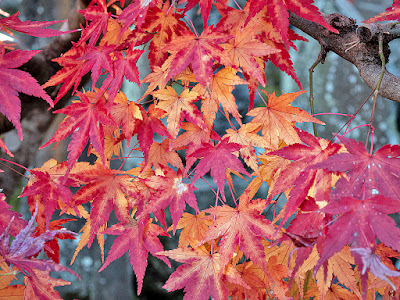
As winter deepens, the rapid drop in temperature causes deciduous trees to stop supplying water to their leaves. In the dehydrated leaves, their chlorophyll turns into bright-color pigments. The discolored and dried leaves eventually fall to the ground in the cold winter wind. They are quickly decomposed by microorganisms and absorbed into the soil as the rich nutrients for the next spring.
The wonder and beauty of the autumnal leaves may imply the profound and hidden intent of our universe that keeps creating life on Earth everlastingly.
Autumn leaves: Kaizo-ji

Under the pale gray sky, the bright autumn leaves are quietly waiting for cold wintry blasts to scatter and fall to the ground.
Soon, the pleasant colors of flowers will almost disappear from view and the desolate wintry scene will continue long until next spring comes.
On the side of the narrow stone steps leading up to the humble garden of this temple, the small magenta flowers of Sazanka (Camellia sasanqua) are inconspicuously blooming as if to silently bid farewell to the late autumn which is leaving hastily.

Autumn leaves: Engaku-ji

The dazzling sunlight of afternoon is pouring down from the pale sky above the San-gedatsu-mon (Three Gates of Liberation) and makes the colored leaves of the old maple trees shine brightly like calm blazing flames in the air.
In Zen temples, the San-gedatsu-mon symbolizes the three kinds of Samadhi. These Samadhis are the ways to attain the profound spiritual awakening that every earthly thing to which we cling is essentially a transient and empty delusion.
For those who have passed through these gates and have reached the state of liberation, I wonder how they see and perceive this fleeting but exquisite scene of autumn leaves glowing in the sun.

Autumn leaves: Engaku-ji

In the garden of the Obai-in (Winter-jasmine temple) located at the innermost place of Engakuji Temple, the old maple tree rising over the small shrine of Sho-kannon (Aryavalokitesvara) is gradually changing the colors of its countless green leaves to the vivid flaming tints of autumn in preparation for the arriving of winter.
The dense mosaic of green, vermilion, red, and yellow leaves is softly shining in the sun to represent the infinite radiance of compassion and salvation that the small wooden image of Kannon is emitting.


Bamboo grove and autumn leaves: Kencho-ji

Like the bright sunset clouds, the blazing colors of autumn leaves are seen through the evergreen bamboo grove. Before long, these flames of leaves will burn out and fade away completely.
The bamboos will stay green during the harsh coldness of winter, while continuing to quietly stand tall in defiance of the fierce wintry weather.


Subscribe to:
Posts (Atom)